The challenge: a sent request was not a completed request.
The brokerage needed verified claims-history documents from every relevant carrier before the team could move the account forward. Completion depended on client authorization, policy years, carrier replies and missing information.
The work was fragmented across communication and records. People had to reconstruct what had been requested, which documents had arrived and what still needed follow-up.

The build: one connected request lifecycle.
The delivery work covered workflow mapping, requirements, implementation coordination, quality assurance, rollout and adoption across sales and operations.
The system coordinates client signatures, carrier follow-up, incoming emails and attachments, exception review and CRM updates. AI interprets email and document context. Deterministic rules govern authorization and state changes.
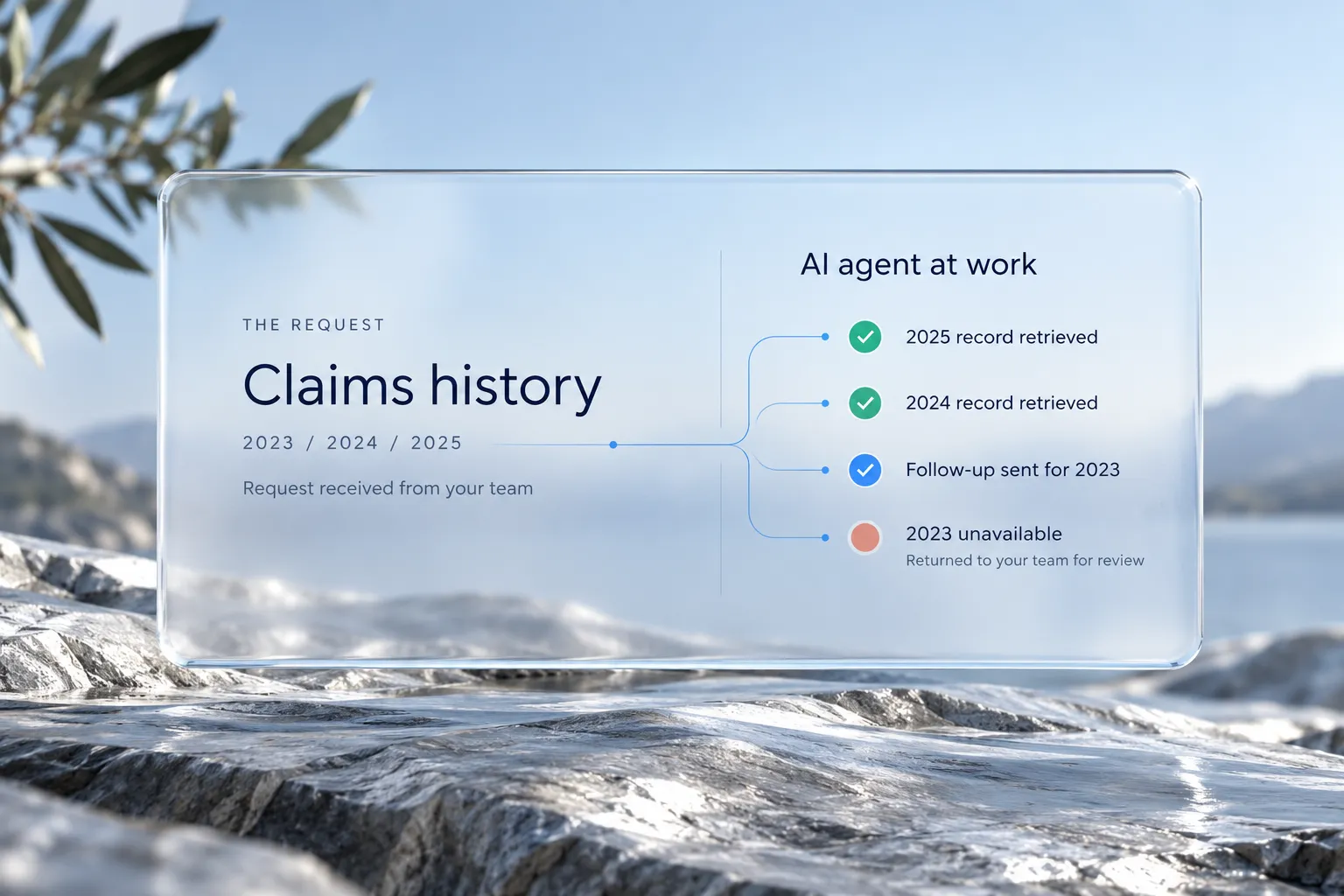
The agent keeps the outstanding work moving.
After authorization, the workflow identifies the required carrier records and keeps communications tied to the request. Incoming responses and attachments are matched to the relevant work. Missing records remain outstanding rather than disappearing behind a sent status.
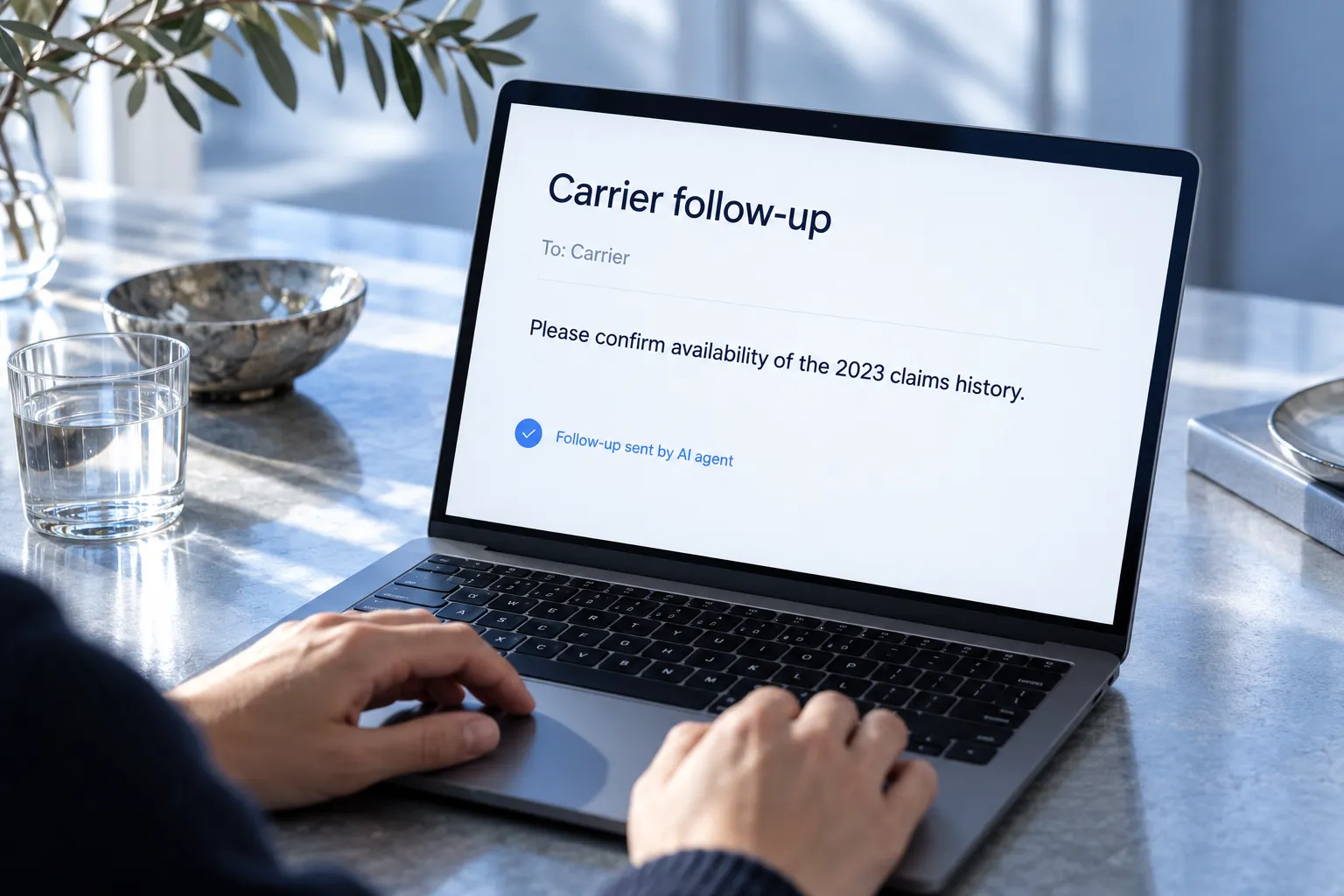
The agent handles follow-up within the configured workflow. An unavailable record or uncertain response routes back to a person with the context and actions already taken.
- Coordinate client authorization and signatures
- Request and retrieve the required carrier records
- Interpret replies and connect attachments
- Follow up on missing items and route exceptions
The observed result: 8.0% to 39.4% completion.
During the May–August 2026 production window, the reported completion rate rose from an 8.0% baseline to 39.4%, approximately 4.9 times the original rate.
Completion means receiving all required loss runs from all of the client’s insurance companies within 60 days of the initial request for client approval. The project owner confirmed the definition and reporting window.
This is an observed result for one brokerage workflow, not a controlled estimate of AI’s isolated effect or a forecast for another business. Discovery for a new implementation establishes its own baseline and completion rules.
What a new implementation would need.
The carrier landscape, authorization process, agency systems and operating rules vary by business. We would validate those inputs before proposing a similar system.
Start with one redacted request. We can map where the work waits, which steps can be automated and which decisions belong with your team.
Explore automation for commercial insurance