
Give the agent a real job.
An agent becomes useful when it has an outcome, access to the right information and boundaries for what it can do. “Answer questions about the business” is a different job from “collect the documents needed to complete this request.”
We start with representative inputs and edge cases. That establishes whether AI interpretation is necessary and how to recognize a correct result.
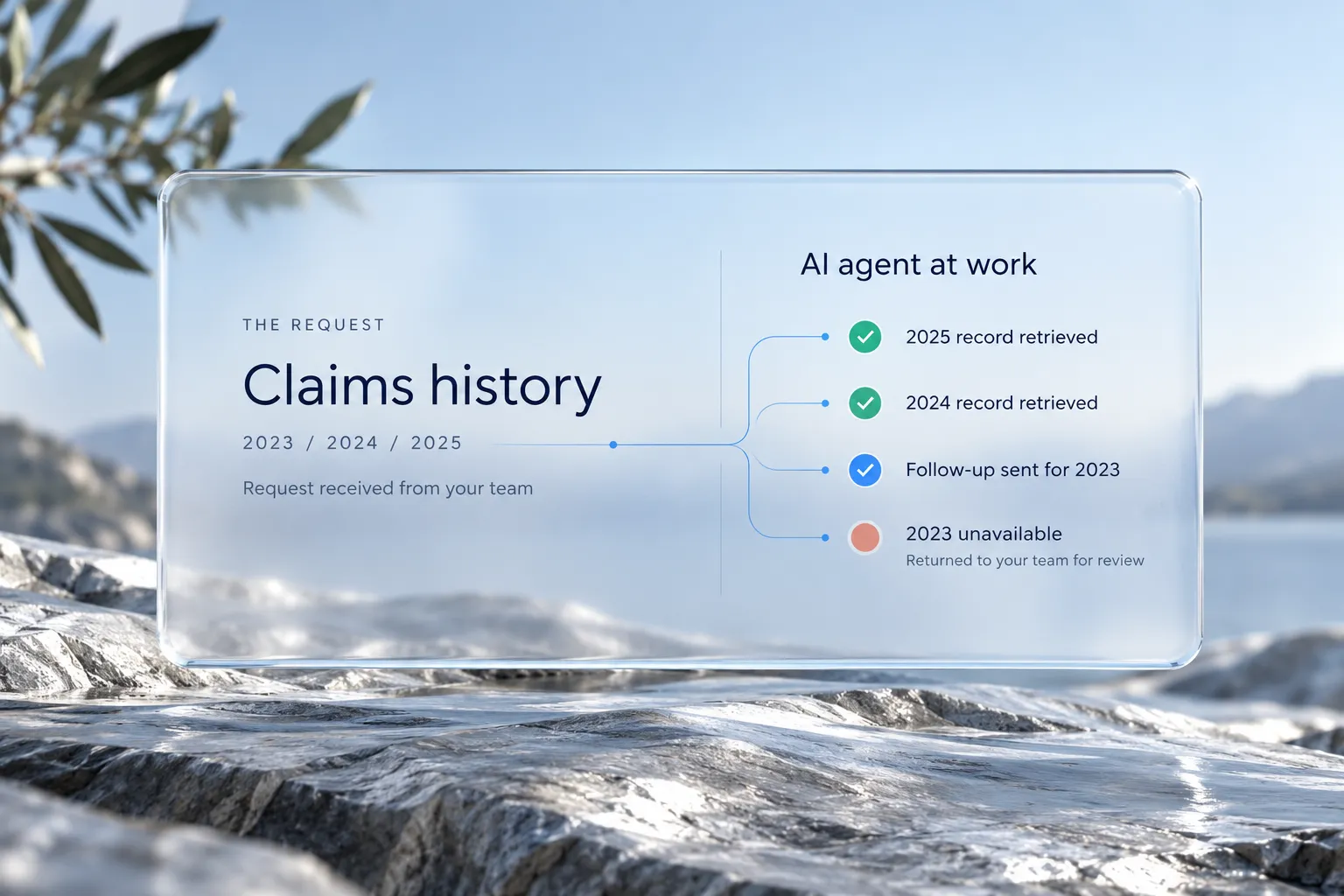
Separate interpretation from permission.
The model can help interpret an email or choose a next step. Business rules still decide whether the system is authorized to act. We design tool access, approval points, audit history and recovery around the consequences of each action.
A record marked complete must meet the actual completion rule. An uncertain answer should not silently become a business fact.
- Tests using representative and difficult examples
- Scoped access to tools and records
- Escalation with context when work cannot complete

Evaluate the workflow in operation.
We track the measures tied to the job: accepted work, exceptions, turnaround and manual effort. Model cost and latency matter alongside accuracy.
We can start in a review-first mode, expand autonomy for well-understood actions and keep consequential decisions with the appropriate people.